Shout out to all my straight sisters I’m so sorry 😞
Jesus, leave his ass.
We learn fast to be very kind and attentive, tho.
My mom, who got her degree in Marriage and Family Counseling when she was 60, says studies show that women will sometimes sometimes leave a long term relationship to live on their own for a while before seeking a new relationship, but men will almost never leave a long term relationship without having a new relationship either in progress or just beginning. They don’t want to give up the caretaker they have without another one on deck or in the wings.
This is so sad
This isnt cute or quirky. This means hes a fucking hopeless user
Please date a man who actually acts like an adult.
Ok I lived with my ex for 2 years and he literally wouldn’t be able to get his own food if I wasn’t at home, I’d get home from work and he’d be angry at me for “making him starve”
My current partner has lived on his own for 8 years and the absolute most I have to help him with is maybe sending him $20 so he can make a bill payment on time
It made me realise for 2-4 years I wasn’t a girlfriend I was a fucking mother
Men who have been independent are capable of reverting if given the slightest excuse. When we married, my ex husband was 10 years older than me and had lived on his own for 8ish years. Yet (and I allowed this until I finally got fed up and took us to counseling) I did 80% of the cooking, because I was better at it. Same with the cleaning, shopping, social planning, etc.
After I left, in the first six months I got texts or calls asking me to please tell him:
The online banking password (dude, I left you, you should really change that)
Where I ordered his special-wecial organic underwear
Where the good cutting board was (my dad gave it to us at our wedding, genius, I took it with me along with the rest of the stuff from my family)
What brand butter we bought
What brand of local kielbasa we bought
Who his doctor was
What RMV office had the shortest lines
Where the old tax returns were (in the fucking box labeled tax returns)
The phone number for his best friend
I shit you not.
Then he had a heart attack (mild) and none of his family or friends were around to take him to the hospital. But instead of calling 911, he called me, who by then lived 45 minutes away. He lived 5 minutes from an EMS dispatch location. He called me, despite the fact that he didn’t believe me 8 months prior when I was feeling suicidal and I had to call a cab to go alone to check myself into the hospital for a 72-hour hold. I told him to call 911, hung up on him when he whined about “making a fuss”, called 911, called his siblings and then texted them “your brother is having a heart attack, I called 911 for him, come home,” and washed my hands of it.
Emotionally vacant men who won’t do household labor or emotional labor are not Nazis, but they aren’t good people, either, and you don’t have to put up with their shit.
Millennial women of Tumblr, please read this post.
And then please: make the decision for yourself to never stay with a man who expects you to be his mother and servant.
i don’t want to achieve equality by sinking to men’s level, i want them to get on ours! why should i have to unlearn the conversational art of waiting my turn, unlearn sexual self-restraint, unlearn trust in others’ good intentions, unlearn the impulse to cater to others’ needs, just to have a chance at success among savages? why can’t the men learn some fucking manners so we can all conduct our affairs in a civilized manner? i shouldn’t have to stop saying sorry, you say sorry!
In the 80s when I was in my freshman year in college, they still had entirely separate mens and women’s dorms. I was in class waiting for a final to start and one of the guys was telling someone about how he had had to go into a women’s dorm to drop something off, and he was startled to see posters on the walls, flowers, curtains, etc. He said his men’s dorm had holes in the walls, things on fire, fights, guys walking around with open wounds and he just didn’t understand why they had to live like this. He said, “I want to live with the women, in civilization.”
Am reading Sisterhood of Spies, about women working for the OSS during WWII. One of the stories mentions that the women in London had a male visitor who would eat in their mess hall once a month. He was married and wasn’t interested in hitting on any of the women; he just wanted to eat in an atmosphere where people said “Please pass the butter,” instead of “PASS THE GODDAMNED GREASE”
I dated a guy who brought me along on group activities (movies, video game night, etc.) with four or five other male friends. Once I mentioned to one of the other guys that I hoped I wasn’t intruding on their “guy time” or some such. He got this sort of rueful look and said, “The truth is, I really like it when you’re here because it gives us a reason to act better. When it’s just guys, we all have to try to outdo each other with how vile we are.”
So the moral of these stories are men don’t even treat each other like human beings.
Me to my 6-year-old son: “You seem to like playing with the girls at school more than the boys. Why do you think that is?”
6-year-old son: “Sometimes I just don’t want to be pushed. It hurts and is mean. And the girls always pretend to be princesses or fun animals and stuff when they have tea parties. The boys just dump the tea all over the place. That’s just stupid and I don’t like wasting all that tea. It takes forever to make.”
Me: “Wow, I can understand why you’d rather play with the girls. The boys seem like they’re kind of rough.”
6-year-old son: “And when I play with the girls they make me the king because none of the other boys want to play tea party.”
Me: “Do you like being the king?”
6-year-old son: “Not really – I’d rather be a wizard, but it makes Georgia and Vivian happy.”
ive been reading a book that basically explains how so-called “brain differences” between the genders is the result of gendered socialization and not the cause of it. i honestly expected the book to be very cis-centric but its actually the opposite, the author stresses that testimony from trans ppl is actually indispensable because we’ve, in a sense, “lived both experiences”
more cis feminists should have this mindset
one of the first examples that she uses to introduce her point about how perception by others can shape a person’s performance actually uses a trans woman. it explains that as a certain trans woman became to be seen as a woman more and more frequently, the ppl arond her eventually started viewing her as being ill equipped for tasks that they did not bother her about pre-transition. eventually she even found herself underperforming in these tasks herself.
I knew it was this book before I’d finished reading the first two lines. Honestly this book is indispensible if you want to debunk any gender determinism people claim is science. I can’t recommend it enough.
(Bonus bonus: I am myself a neuroscientist, and the old white men mentioned above – who are not – could not have missed the point harder if they’d actively tried. Which. Maybe?)
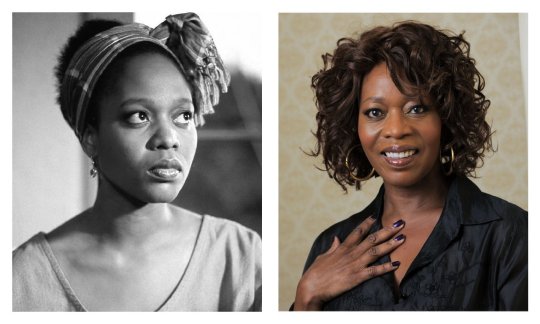
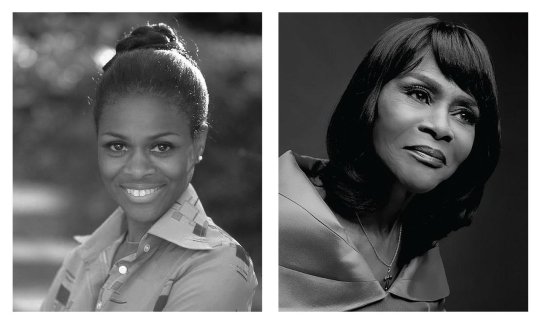
“40 is good, 50 is great, 60 is fab, and 70 is fucking awesome!” ~ Helen Mirren 💪🏻
missed some greats!
I can’t believe Julie Andrews is not on this list guys.
“It’s fucking outrageous. It’s ridiculous. And ’twas ever thus. We all watched James Bond as he got more and more geriatric, and his girlfriends got younger and younger. It’s so annoying.” – Helen Mirren on the bullshit that is (sexist) ageism (source)
Whenever you need a positive role model to help you remember that aging is NATURAL, aging is BEAUTIFUL, there is NOTHING WRONG with aging, and if you’re LUCKY will you live long enough to experience it – look long and hard at every single one of these these Queens.
LOOK. AT. THEM.
Go ladies!
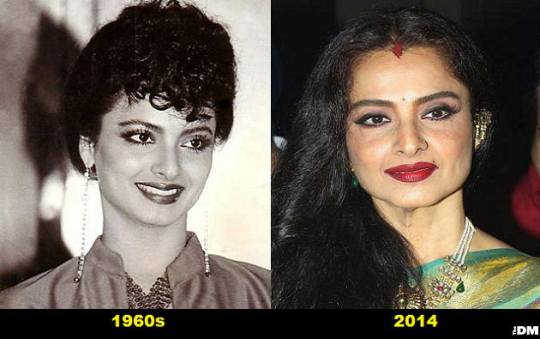
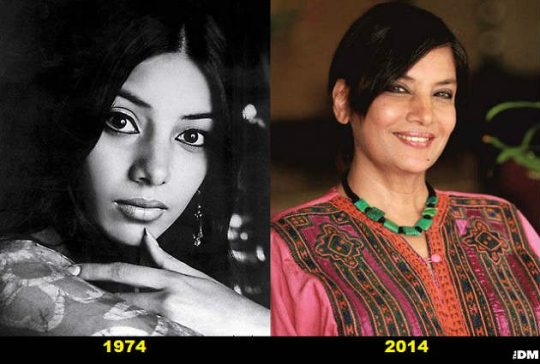
Might I add
Rekha
Hema Malini
Shabana Azmi
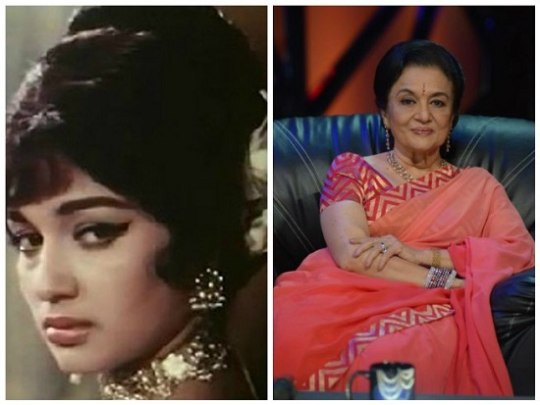
Asha Parekh
Rita Moreno
Many women have talked about how amazing life is after your 40s. Some have their happiest years in their 70s. We need to stop believing society when it tells us our lives are over when we reach 35.
girl culture is turning around every few feet when you’re walking alone to see if someone’s following u
Learn to peep through the corner of your eye so you’re not quite so obvious when you turn.
Putting in your earphones so hopefully no random men try to talk to/harass you but not actually playing music so you can listen for footsteps/other suspicious noises behind you.
feeling like someone is following you and subtly shifting whatever object you’re holding into a better grip so you can use it as a bludgeon if the person behind you tries anything
Being fucking terrified when street lamps give you more than one shadow
This weekend I was schmoozing at an event when some guy asked me what kind of history I study. I said “I’m currently researching the role of gender in Jewish emigration out of the Third Reich,” and he replied “oh you just threw gender in there for fun, huh?” and shot me what he clearly thought to be a charming smile.
The reality is that most of our understandings of history revolve around what men were doing. But by paying attention to the other half of humanity our understanding of history can be radically altered.
For example, with Jewish emigration out of the Third Reich it is just kind of assumed that it was a decision made by a man, and the rest of his family just followed him out of danger. But that is completely inaccurate. Women, constrained to the private social sphere to varying extents, were the first to notice the rise in social anti-Semitism in the beginning of Hitler’s rule. They were the ones to notice their friends pulling away and their social networks coming apart. They were the first to sense the danger.
German Jewish men tended to work in industries which were historically heavily Jewish, thus keeping them from directly experiencing this “social death.” These women would warn their husbands and urge them to begin the emigration process, and often their husbands would overlook or undervalue their concerns (“you’re just being hysterical” etc). After the Nuremberg Laws were passed, and after even more so after Kristallnacht, it fell to women to free their husbands from concentration camps, to run businesses, and to wade through the emigration process.
The fact that the Nazis initially focused their efforts on Jewish men meant that it fell to Jewish women to take charge of the family and plan their escape. In one case, a woman had her husband freed from a camp (to do so, she had to present emigration papers which were not easy to procure), and casually informed him that she had arranged their transport to Shanghai. Her husband—so traumatized from the camp—made no argument. Just by looking at what women were doing, our understanding of this era of Jewish history is changed.
I have read an article arguing that the Renaissance only existed for men, and that women did not undergo this cultural change. The writings of female loyalists in the American Revolutionary period add much needed nuance to our understanding of this period. The character of Jewish liberalism in the first half of the twentieth century is a direct result of the education and socialization of Jewish women. I can give you more examples, but I think you get the point.
So, you wanna understand history? Then you gotta remember the ladies (and not just the privileged ones).
Holy fuck. I was raised Jewish— with female Rabbis, even!— and I did not hear about any of this. Gender studies are important.
“so you just threw gender in there for fun” ffs i hope you poured his drink down his pants
I actually studied this in one of my classes last semester. It was beyond fascinating.
There was one woman who begged her husband for months to leave Germany. When he refused to listen to her, she refused to get into bed with him at night, instead kneeling down in front of him and begging him to listen to her, or if he wouldn’t listen to her, to at least tell her who he would listen to. He gave her the name of a close, trusted male friend. She went and found that friend, convinced him of the need to get the hell out of Europe, and then brought him home. Thankfully, her husband finally saw sense and moved their family to Palestine.
Another woman had a bit more control over her own situation (she was a lawyer). She had read Mein Kampf when it was first published and saw the writing on the wall. She asked her husband to leave Europe, but he didn’t want to leave his (very good) job and told her that he had faith in his countrymen not to allow an evil man to have his way. She sent their children to a boarding school in England, but stayed in Germany by her husband’s side. Once it was clear that if they stayed in Germany they were going to die, he fled to France but was quickly captured and killed. His wife, however, joined the French Resistance and was active for over a year before being captured and sent to Auschwitz.
(This is probably my favorite of these stories) The third story is about a young woman who saved her fiance and his father after Kristallnacht. She was at home when the soldiers came, but her fiance was working late in his shop. Worried for him, she snuck out (in the middle of all the chaos) to make sure he was alright. She found him cowering (quite understandably) in the back of his shop and then dragged him out, hoping to escape the violence. Unfortunately, they were stopped and he, along with hundreds of other men, was taken to a concentration camp. She was eventually told that she would have to go to the camp in person to free him, and so she did. Unfortunately, the only way she could get there was on a bus that was filled with SS men; she spent the entire trip smiling and flirting with them so that they would never suspect that she wasn’t supposed to be there. When she got to the camp, she convinced whoever was in charge to release her fiance. She then took him to another camp and managed to get her father-in-law to be released. Her father-in-law was a rabbi, so she grabbed a couple or witnesses and made him perform their marriage ceremony right then and there so that it would be easier for her to get her now-husband out of the country, which she did withing a few months. This woman was so bad ass that not only was her story passed around resistance circles, even the SS men told it to each other and honoured her courage.
The moral of these stories is that men tend to trust their governments to take care of them because they always have; women know that our governments will screw us over because they always have.
Another interesting tidbit is that there is sufficient evidence to suggest that Kristallnacht is a term that historians came up with after the fact, and was not what the event was actually called at the time. It’s likely that the event was actually called was (I’m sorry that I can’t remember the German word for it but it translates to) night of the feathers, because that, instead of broken glass, is the image that stuck in people’s minds because the soldiers also went into people’s homes and destroyed their bedding, throwing the feathers from pillows and blankets into the air. What does it say that in our history we have taken away the focus of the event from the more domestic, traditionally feminine, realms, and placed it in the business, traditionally masculine, realms?
Badass women and interesting commentary. Though I would argue that “Night of Broken Glass" includes both the personal and the private spheres. It was called Kristallnacht by the Nazis, which led to Jewish survivors referring to it as the November Pogrom until the term “Kristallnacht" was reclaimed, as such.
None of this runs directly counter to your fascinating commentary, though.
it’s hilarious to me when people call historical fashions that men hated oppressive
like in BuzzFeed’s Women Wear Hoop Skirts For A Day While Being Exaggeratedly Bad At Doing Everything In Them video, one woman comments that she’s being “oppressed by the patriarchy.” if you’ve read anything Victorian man ever said about hoop skirts, you know that’s pretty much the exact opposite of the truth
thing is, hoop skirts evolved as liberating garment for women. before them, to achieve roughly conical skirt fullness, they had to wear many layers of petticoats (some stiffened with horsehair braid or other kinds of cord). the cage crinoline made their outfits instantly lighter and easier to move in
it also enabled skirts to get waaaaay bigger. and, as you see in the late 1860s, 1870s, and mid-late 1880s, to take on even less natural shapes. we jokingly call bustles fake butts, but trust me- nobody saw them that way. it was just skirts doing weird, exciting Skirt Things that women had tons of fun with
men, obviously, loathed the whole affair
(1864)
(1850s. gods, if only crinolines were huge enough to keep men from getting too close)
(no date given, but also, this is 100% impossible)
(also undated, but the ruffles make me think 1850s)
it was also something that women of all social classes- maids and society ladies, enslaved women and free women of color -all wore at one point or another. interesting bit of unexpected equalization there
and when bustles came in, guess what? men hated those, too
(1880s)
(probably also 1880s? the ladies are being compared to beetles and snails. in case that was unclear)
(1870s, I think? the bustle itself looks early 1870s but the tight fit of the actual gown looks later)
hoops and bustles weren’t tools of the patriarchy. they were items 1 and 2 on the 19th century’s “Fashion Trends Women Love That Men Hate” lists, with bonus built-in personal space enforcement
Gonna add something as someone who’s worn a lot of period stuff for theatre:
The reason you suck at doing things in a hoop skirt is because you’re not used to doing things in a hoop skirt.
The first time I got in a Colonial-aristocracy dress I felt like I couldn’t breathe. The construction didn’t actually allow me to raise my arms all the way over my head (yes, that’s period-accurate). We had one dresser to every two women, because the only things we could put on ourselves were our tights, shifts, and first crinoline. Someone else had to lace our corsets, slip on our extra crinolines, hold our arms to balance us while a second person actually put the dresses on us like we were dolls, and do up our shoes–which we could not put on ourselves because we needed to be able to balance when the dress went on. My entire costume was almost 40 pounds (I should mention here that many of the dresses were made entirely of upholstery fabric), and I actually did not have the biggest dress in the show.
We wore our costumes for two weeks of rehearsal, which is quite a lot in university theatre. The first night we were all in dress, most of the ladies went propless because we were holding up our skirts to try and get a feel for both balance and where our feet were in comparison to where it looked like they should be. I actually fell off the stage.
By opening night? We were square-dancing in the damn things. We had one scene where our leading man needed to whistle, but he didn’t know how and I was the only one in the cast loud enough to be heard whistling from under the stage, so I was also commando-crawling underneath him at full speed trying to match his stage position–while still in the dress. And petticoats. And corset. Someone took my shoes off for that scene so I could use my toes to propel myself and I laid on a sheet so I wouldn’t get the dress dirty, but that was it–I was going full Solid Snake in a space about 18″ high, wearing a dress that covered me from collarbones to floor and weighed as much as a five-year-old child. And it worked beautifully.
These women knew how to wear these clothes. It’s a lot less “restrictive” when it’s old hat.
I have worn hoop skirts a lot, especially in summer. I still wear hoop skirts if I’m going to be at an event where I will probably be under stage lights. (For example, Vampire Ball.)
I can ride public transportation while wearing them. I can take a taxi while wearing them. I can go on rides at Disneyland while wearing them. Because I’ve practiced wearing them and twisting the rigid-but-flexible skirt bones so I can sit on them and not buffet other people with my skirts.
Hoop skirts are awesome.
Hoop skirts are also air conditioning. If you ever go to reenactments in the South, particularly in summer, you’ll notice a lot of ladies gently swaying in their big 1860s skirts – because it fans all the sweaty bits. You’ll be much cooler in a polished cotton gown with full sleeves, ruffles, and hoopskirt than in a riding jacket and trousers, let me promise you! (This is part of the reason many enslaved women also enthusiastically preferred larger skirts – they had more to do than sit in the shade, but they’d get a bit of a breeze from the hoops’ movement as they were walking.)
They’re also – and I can’t emphasize enough how important this is – really easy to pee in. If you’re in split-crotch drawers (which, until at least the 1890s, you were), you can take an easy promenade a few feet away from the gents and then squat down and pee in pretty much total privacy. It gives so much freedom in travel when it’s not a problem to pee most anywhere.
People also don’t realize that corsets themselves were a HUGE HUGE IMPROVEMENT over previous support-garment styles – and if you have large breasts that don’t naturally float freely above your ribcage (which some people’s do! but it’s not that common), corsets are often an improvement over modern bras.
They hold up the breasts from underneath, taking the weight of them off your back. Most historical corset styles don’t have shoulder straps, so you’re not bearing the weight of your breast there, either, and you can raise your arms as far as your dress’s shoulder line allows (which is the actually restrictive bit – in my 1830s dress, literally all I can do is work in my lap, but in my 1890s dress I can paddle a kayak or draw a longbow with no trouble. Both in a full corset). They support your back and reduce the physical effort it takes to not slouch, helping avoid back pain. They’re rigid enough that you don’t usually have to adjust your clothing to keep it where it belongs. They’re flexible – if you’re having a bloaty PMS day you just … don’t lace it as tightly, and if your back muscles are sore you can lace it a little tighter. And you can undo a cup (or, y’know, not have breast cups) to nurse a baby without losing any of the structural integrity of the garment.
I do educational/historical dressing and people are really insistent, like, “The corset was invented by a man, wasn’t it?” “Actually, women were at the forefront of changing undergarment styles throughout the 19th century!” “But it’s true that it was invented by a man.”
Uh, well, it’s hard to say who “invented” the style but it’s very likely that women’s dressmakers mostly innovated women’s corsets and men’s tailors mostly innovated men’s corsets, honey. Because those exist too.
Also? These fashions are about taking up space. They’re about being loud and visible and saying HERE I AM. About saying “I’m so rich, I need someone to help me dress every morning.” And about saying, “I am not solely here for male consumption”–there’s a reason so many cartoons lampooning women’s fashion are about how hard those ladies are to kiss, and how impossible it’d be to have a quick fuck in them. (Which it actually isn’t, but that’s beside the point)
Historical women’s fashions aren’t 100% unproblematic and absolutely wonderful. They make stark class distinctions incredibly visible, because you simply cannot wear some of these dresses and keep them maintained without a private staff to do a ton of work for you. They upheld a standard of femininity a lot of women were excluded from. They limited women’s and girls’ participation in sports and athletics.





























 tumblr backup