In The Lion King, unlike the other lions, Scar’s claws are always displayed throughout the movie.
In The Little Mermaid (1998) when King Triton is introduced, you can see Mickey, Donald, Goofy and Kermit the Frog in the crowd, underwater.
In Cars, the flies are actually tiny cars with wings.
In Hercules (1997) the Fates tell Hades all the planets will align but only show 6 planets aligning. These are the 5 planets plus Earth that the ancient Greeks were aware of and could see with the naked eye.
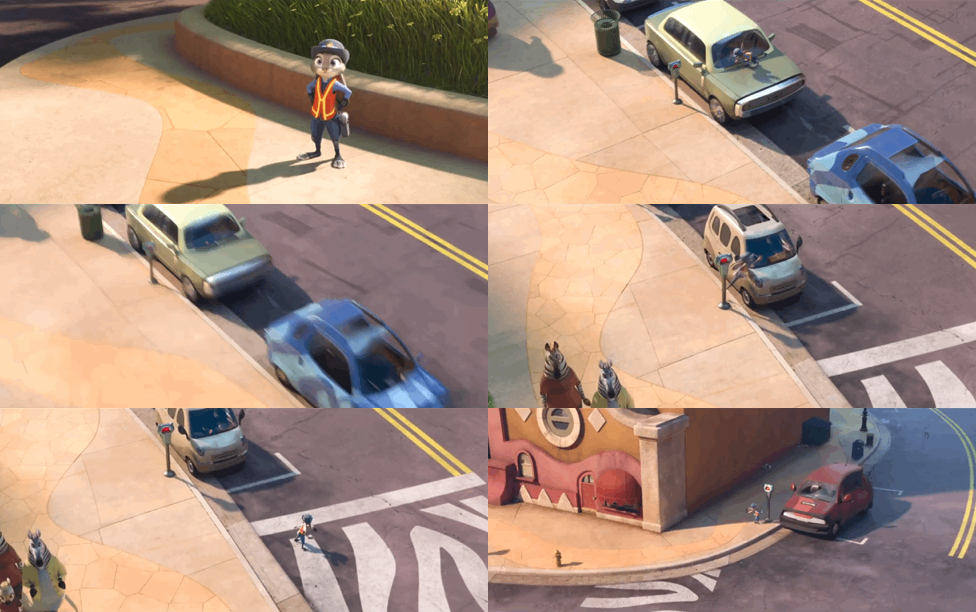
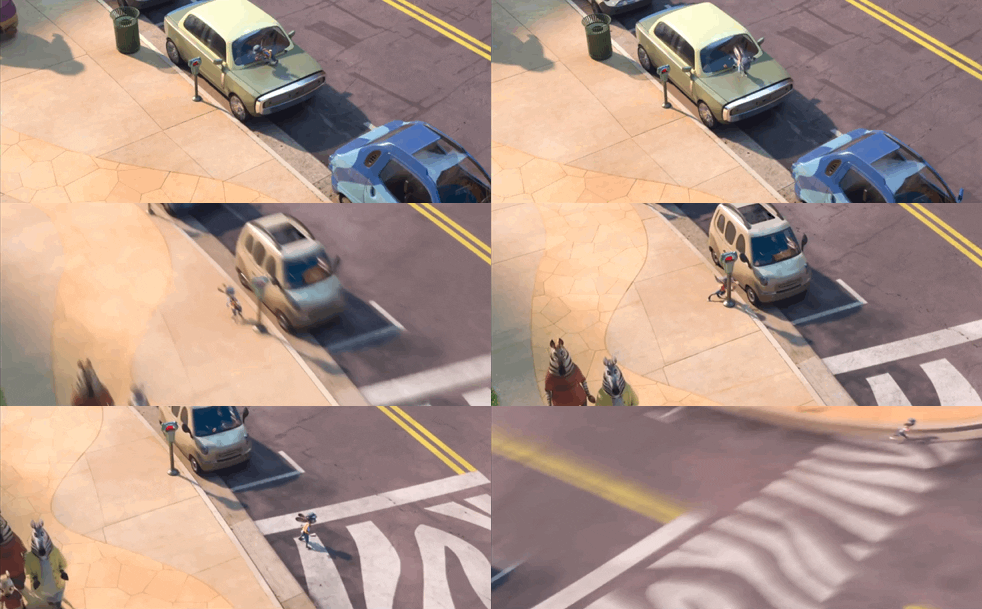
In Zootopia, while Officer Judy Hopps is ticketing cars around the city, she never crosses the street illegally. She always uses a crosswalk and looks both ways before crossing.
In monsters inc, sully’s chair has a hole in it to accommodate his tail.
In The Brave Little Toaster, all of the walls in the cottage are cleaned only as high as Blanky can reach.
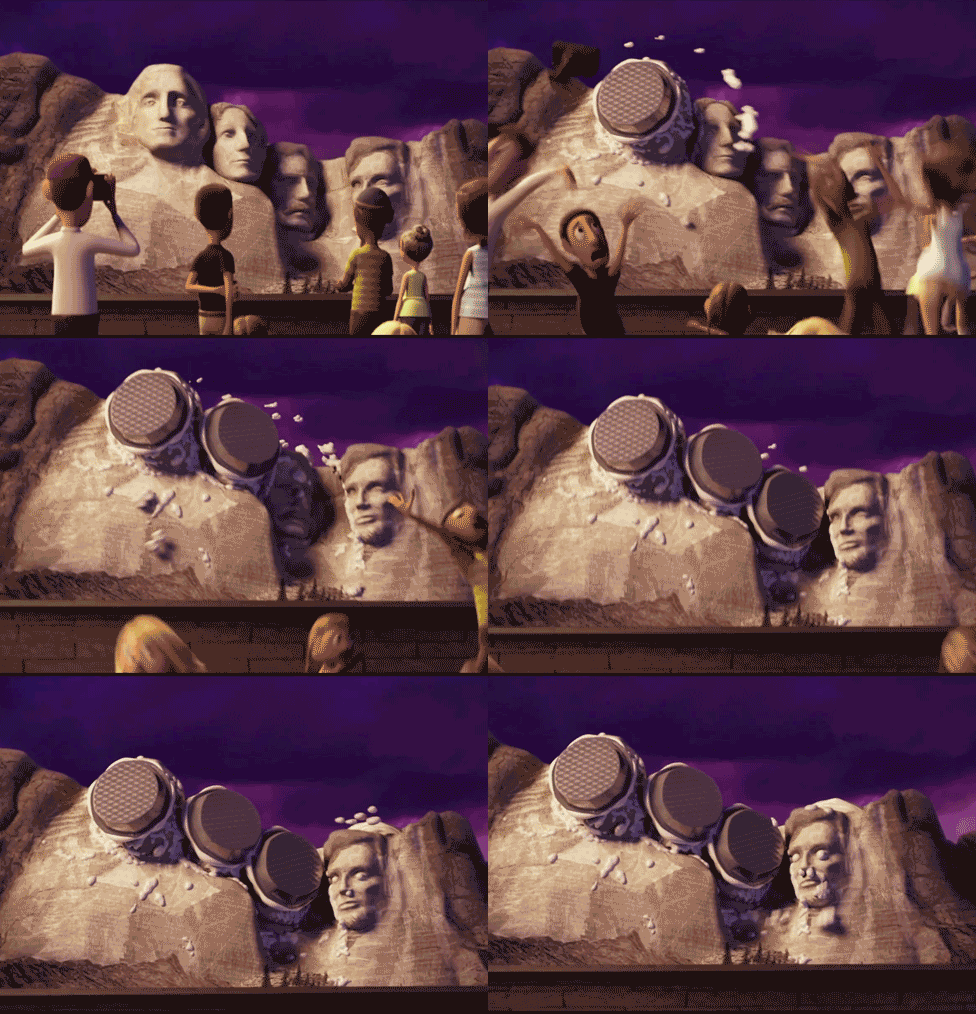
In Cloudy with
a Chance of Meatballs, during the food storm the president’s of Mount
Rushmore get pied in the face but Abe gets hit in the back just like his
assassination.
In Cars the truck stop advertises “convertible waitresses” i.e., topless.
In Finding Nemo, Bruce the shark starts crying when Marlin starts talking about Nemo, saying “I never knew my father”. Male sharks mate with the female then leave, so baby sharks never actually meet their father.
The Magic Carpet from Aladdin makes an appearance in Moana.
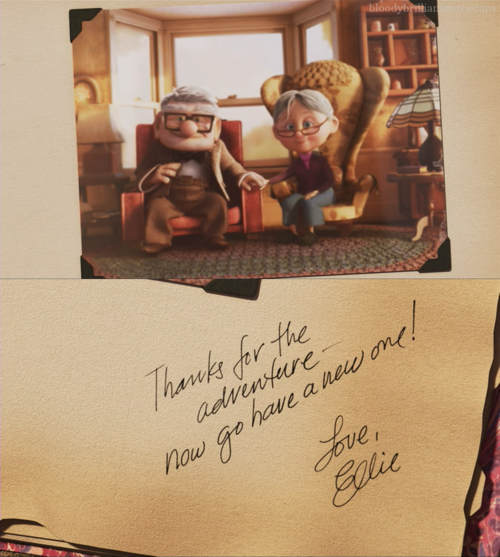
In UP, there are craft supplies on the table by Ellie’s hospital bed when she gives the Adventure Book to Carl.
The hold up scene in the Incredibles is actually an homage to a similar scene from Die Hard with a Vengeance, which also starred Samuel L. Jackson.
In Toy Story 3 (2010) Buzz Lightyear’s batteries are exposed showing the Buy n Large brand, the same company responsible for making WALL·E.
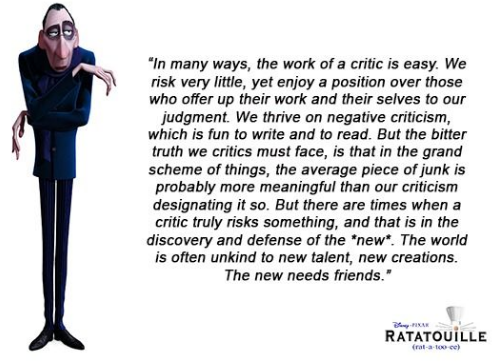
In Ratatouille (2007) Anton Ego’s typewriter resembles a skull and his office a coffin.
In Monsters, Inc. (2001), there are multiple sizes of coffee cup for each of the different sized monsters.
In Toy Story 2 (1999), as the restorationist is going through his equipment, he opens a drawer filled with chess pieces. This is a reference to the Pixar short “Geri’s Game” where a similar looking man plays a game of chess against himself.
In Inside Out (2015) while going through Imagination Land a game box can be seen in the background with Nemo on it called Find Me.
In Cars, you can spot Sully and Mike in cars form!
At the end of Ratatouille (2007) Anton Ego is a little bit fatter. This is especially poignant since he states, “I don’t like food, I love it… if I don’t love it I don’t swallow.”
In Coco we can see The Incredibles poster.
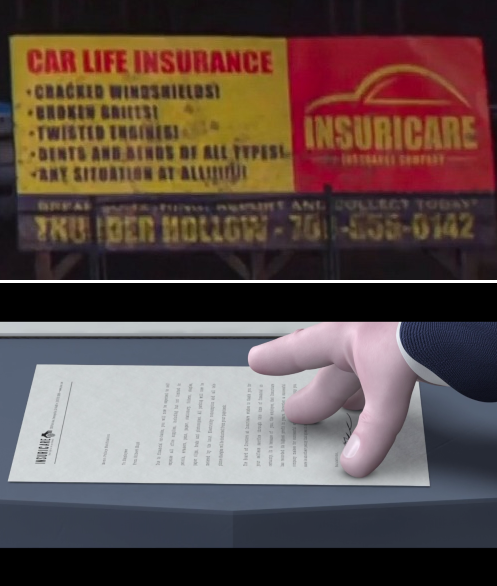
Insuricare,
the company that offers “car life insurance” to the cars in Cars 2, is
the same company Bob Parr works for in The Incredibles.
In Inside Out (2015) two of the memory orbs on the shelves contain scenes from Up (2009). One features Carl & Ellie’s wedding, while the other shows their house.
In
Toy Story Woody is trapped in a crate which is stuck under a ‘Binford’
tool-box. Binford is the fictional tool company in the TV show Home
Improvement which starred Tim Allen, the voice of Buzz Lightyear.
In
The Incredibles, in Bob Parr’s home office, there’s a photo from a
fishing trip where it appears he caught Bruce from Finding Nemo.
In
Cars 2 (2011) while in a pub in London there is a tapestry on the wall
that is the DunBroch family tapestry from Brave (2012), except they are
portrayed as cars.
In “Ratatouille” (2007), Linguini has to hide Remy before his second
day of work. He offers to hide him in his pants, revealing his briefs
covered in The Incredibles logo.
After the plane is blown up in The Incredible, Helen (Elastigirl) knows the plane debris is going to fall on them due to seeing the reflection in the water.
Y’all know when Mulan is sitting in the rain and watches her parents silhouette disappear as the candle is blown out and then her eyes squint in determination and the music that starts to play and you see her go into the family temple and light a match and bow in respect and then sneak into her parents room and switch the scroll for her hair brooch and then the way her reflection is shown as she pulls the sword and cuts her hair?? It’s literally more iconic than any marvel movie
One of my
favorite things about Coco is it’s that kind of story you can “read”
in different levels. I mean, the main plot didn’t surprise me when I watched
the movie for the first time, but I didn’t care the slightest, because I
enjoyed A LOT the way everything was
being set: how the key information was never said aloud, how the characters’
path crossed several times without actually meeting, all the misunderstandings
here and there… In a way, it was like if there was another story happening behind
the scenes.
For
example, one of those moments I love the most is Poco Loco scene. When the
Rivera family gets to Plaza de la Cruz looking for Miguel, he and Héctor are
performing on the stage and nobody seems to notice. Julio, Rosita and Victoria
know nothing about Héctor, I suppose the twins got used to ignore his music too,
but Imelda? Imelda would’ve noticed for sure. It was her song, after all. But
she’s the only one that didn’t enter the plaza.
And if you
look closely…
She did
actually take a few steps towards the plaza, but then Héctor starts singing his
verses of Poco Loco and she immediately faces the stage (actually, the twins
are also looking at the stage quite shockingly, tbh; at least, one of them).
The next thing we know is she has vanished. I like to think she saw him performing
and then flew, but the movie couldn’t show us her actual reaction, because (by
then) we didn’t know who Héctor actually was yet.
Another
example I like a lot: there are many people that think the twins don’t
recognize/know anything about Héctor in the Land of the Dead, but look at the
bridge scene.
One of the
twins is smiling when Héctor shows up disguised as Frida. Why the hell is he
smiling like that, when just a moment before they were all stressed about
Imelda’s and Miguel’s situation? And it’s a smug smile, like if he (Felipe or
Óscar) was suppressing a chuckle (“So it’s Frida this year, eh? Come on,
Héctor”). But look how cleverly the frame of the scene is set, so his eyes
are out of sight and we don’t know where that twin is looking at exactly. As far
as we know, he could’ve been lost in his thoughts or he could’ve spotted his
brother in law.
And in the
next moment, when Héctor manages to cross and runs to the bridge…
They’re
whispering! He’s telling something to his brother and this is smiling too!
“There
he goes again” “Pobre
diablo” “I’m
glad Imelda’s not here to witness this” “It
would be the icing on the cake…”
We will
never know what are the twins doing or talking about, it’s something out of our
reach; but that’s the magic of this kind of details. You can imagine whatever
you want, and Coco is full of moments like these.
Recently,
I’ve also noticed the faces of Rosa and Abel while the family is scolding
Miguel after finding out his hideout. She looks concerned.
He looks
shocked when Miguel’s talking about Ernesto.
And when
Elena is about to smash the guitar, Abel’s not surprised, he’s in pain.
Now I wonder for how long these two kids have
also been loving music in secret, and if they weren’t caught just because
they were better at hiding it than Miguel.
The Disney Renaissance refers to an era from 1989-1999 during which Walt Disney Animation Studios returned to making more musical animated films that were mostly based on well-known stories, and it allowed Disney’s animated films to become powerhouse successes at the domestic and foreign box office; making much more profit than most of the other Disney films of the past eras. (x) (x)
The animated films released during this period include: The Little Mermaid (1989), The Rescuers Down Under (1990), Beauty and the Beast (1991), Aladdin (1992), The Lion King (1994), Pocahontas (1995), The Hunchback of Notre Dame (1996), Hercules (1997), Mulan (1998) and Tarzan (1999).














 tumblr backup